
Custom Illustrations vs Stock Images: Which to Choose
Custom illustrations and stock images serve different purposes in shaping your brand's visuals. Here's the quick takeaway:
- Custom Illustrations: Perfect for creating a unique, memorable brand identity. They deliver up to 90% higher recall rates and are ideal for explaining abstract concepts or aligning visuals with your brand's tone. However, they require more time and budget, ranging from $500 to $5,000+.
- Stock Images: Convenient and cost-effective, with prices starting as low as $1. Ideal for quick projects or when budgets are tight. However, they lack exclusivity and may be used by competitors, leading to "visual déjà vu."
Quick Comparison
| Factor | Stock Images | Custom Illustrations |
|---|---|---|
| Cost | $1–$575 per image | $500–$5,000+ |
| Originality | Generic; shared by others | Exclusive to your brand |
| Time Investment | Instant download | Requires days or weeks |
| Brand Recall | Lower recall | Up to 90% higher recall |
| Customization | Limited | Fully tailored to your needs |
Key Insight: Use stock images for speed and affordability in low-priority projects. Opt for custom illustrations when standing out matters - like for product launches, homepage visuals, or abstract storytelling. A hybrid approach can balance cost and impact.
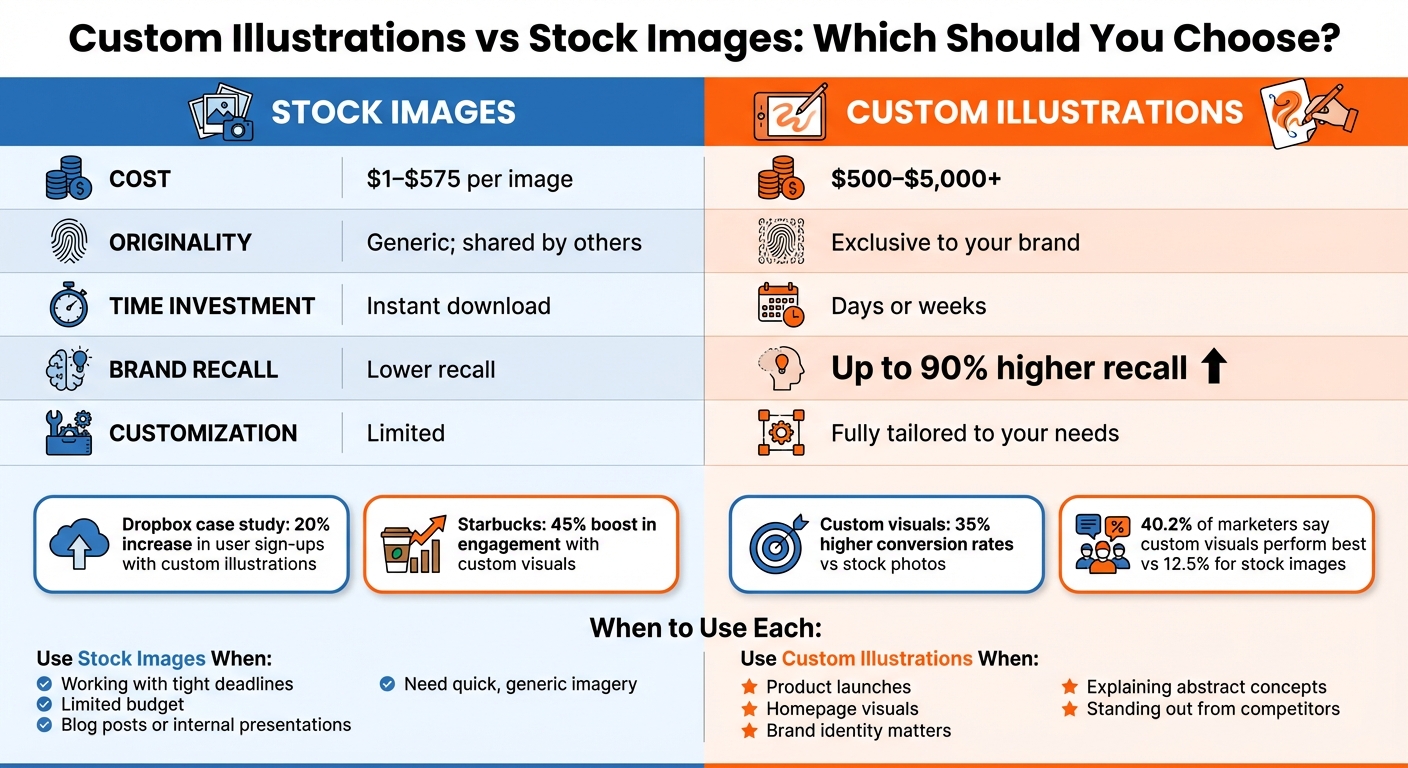
Custom Illustrations vs Stock Images: Cost, Time, and Brand Impact Comparison
Ditch Stock Photos: Custom Illustrations for Small Business
What Are Stock Images?
Stock images are a practical solution for brands looking to balance tight budgets with the need for high-quality visuals. These include photographs, vectors, and illustrations that are available for licensing through online stock agencies, which host vast, searchable collections.
The key distinction between stock images and custom-created visuals lies in ownership. When you license a stock image, you’re not purchasing the copyright. Instead, you’re paying for the right to use the image, while the original creator retains ownership. This licensing model makes stock images both accessible and straightforward to use.
"Royalty-free licensing is a current gold standard for stock photography and stock media websites." - Stocksy
Stock images come with flexible licensing options. Royalty-free licenses allow you to pay a one-time fee - usually ranging from $0.25 to $15 for a high-resolution image - and use the image without ongoing royalties. These licenses typically cover up to 500,000 print copies and unlimited digital impressions. For more specific uses, like creating products for resale (e.g., t-shirts or mugs), you’ll need an extended license. Additionally, rights-managed licenses apply to specific, pre-defined uses. Another important distinction is between editorial licenses, which restrict usage to educational or informational contexts (like news articles), and commercial licenses, which allow broader applications like advertising and brand promotion.
One of the biggest perks of stock images is their convenience. They’re ready to download instantly, cutting out the time and expense of organizing photoshoots, hiring photographers, or handling post-production edits. Plus, tools like Canva have integrated stock libraries, making it even easier to incorporate professional visuals into your designs. For businesses working with limited budgets, stock images offer an affordable way to access polished, high-quality visuals without breaking the bank.
What Are Custom Illustrations?
Custom illustrations are unique visual elements created specifically for a brand, unlike generic stock images available to everyone. These can include icons, graphics, patterns, or even characters, all crafted from scratch using techniques like vector design, 3D modeling, or hand-drawing. The goal is to establish a distinct visual identity that reflects your brand's personality.
The process often involves working closely with talented illustrators or leveraging AI-powered tools to produce visuals that match your brand's color palette, tone, and values. Every aspect - such as line thickness or color choices - is fine-tuned to communicate ideas that standard photography often can't, like complex software solutions, forward-thinking investment approaches, or subtle emotional nuances.
"Custom illustrations define your brand voice, narrate its story, and ensure instant recognition." - Jack Bradley, Creative Writer, Coral Digital
Custom illustrations are known to improve brand recall. Research consistently shows that original visuals, such as infographics and illustrations, outperform stock photos in engaging audiences.
AI-powered platforms like IllustrationsAI have also made creating custom visuals faster and more accessible. Instead of waiting weeks for traditional designs, brands can now generate tailored illustrations in minutes by uploading reference images. These tools analyze your brand's "visual DNA" to ensure every illustration aligns with your style, lighting, and color palette. This approach combines the speed of stock visuals with the exclusivity of custom designs, making it easier than ever to maintain a cohesive visual strategy. This evolution sets the stage for comparing custom illustrations with stock images in the following section.
Pros and Cons of Stock Images
Benefits of Stock Images
Stock images offer a quick and budget-friendly way to access high-quality visuals without the hassle of organizing a photo shoot or hiring a designer. With prices starting around $25, premium platforms provide access to a vast library of high-resolution imagery, helping brands present a polished and professional look. The variety of themes available can spark creative ideas for websites, advertisements, and other marketing materials.
They also save money while boosting retention. Pairing text with an image can improve recall - 65% of viewers remember information paired with a photo for up to three days. For businesses working under tight deadlines, having a ready-to-use image available for download can be a lifesaver. However, these advantages come with some notable trade-offs.
Drawbacks of Stock Images
One major downside of stock images is their lack of exclusivity, which can dilute brand identity. Kirk Wells from Modo Modo Agency explains:
"The open secret of stock image sites is that yes, while they all appear to have different images, most of them ultimately pull from the same pool of stock photos".
This means popular images can appear across multiple platforms. For instance, a single business team photo was downloaded over 68,000 times, making it likely that competitors might use the same image.
This overuse can harm brand performance. In fact, 39% of marketers have labeled stock photos as their least effective visual assets. Custom visuals, on the other hand, can increase conversion rates by up to 35% and improve brand recall by as much as 90% [25,1].
Stock image licensing can also be restrictive, further limiting how businesses can use these visuals. Additionally, industry-specific images sometimes miss the mark - like showing workers with improper safety gear - potentially damaging credibility.
Jakob Nielsen, a user experience researcher, highlights the authenticity issue with stock images:
"People only pay attention to images that tell you something. And it's quite hard for stock images to tell you things".
Pros and Cons of Custom Illustrations
Benefits of Custom Illustrations
Custom illustrations give you full control over your brand's visual identity. They’re designed to align with your specific tone, personality, and values, making it easier to communicate abstract ideas, visualize complex data, or convey emotions that photos often can’t capture.
They can also drive measurable results. For example, Dropbox saw a 20% increase in user sign-ups after adopting a custom illustration style, while Starbucks reported a 45% boost in engagement during their holiday campaign. These unique visuals strengthen your brand identity, which is key to effective storytelling.
Another advantage? Exclusive ownership. Unlike stock images, which may appear on countless other platforms, custom illustrations are yours alone. They can be reused across campaigns without recurring licensing fees, making them a smart long-term investment.
"Custom illustration brings a depth, authenticity, and personal touch to branding that no pre-made or AI-generated option can match".
Still, while the benefits are compelling, custom illustrations come with challenges that may not suit every budget or timeline.
Drawbacks of Custom Illustrations
The biggest hurdle is the cost. Custom illustrations can range from $500 to over $5,000, far outpacing the price of stock images, which typically cost between $1 and $15.
"If there is no extra money to hire a photographer or an illustrator with a particular style, then royalty free stock will be required".
Time is another factor. Stock images are ready to download instantly, but custom illustrations require a more involved process - creative briefs, drafts, revisions - which can take days or even weeks. This makes planning ahead essential, especially for campaigns with tight deadlines. Additionally, achieving professional-quality results demands access to skilled artists or specialized tools, which may not always be readily available.
While custom illustrations offer unmatched creativity and exclusivity, these challenges can impact both budget and project timelines.
Custom Illustrations vs Stock Images: Direct Comparison
When weighing custom illustrations against stock images, it’s essential to consider how each option affects your campaign's pace and ability to connect with your audience. Below is a straightforward comparison of these two approaches based on the factors that matter most:
| Factor | Stock Images | Custom Illustrations |
|---|---|---|
| Cost | $1 to $575 per image (subscription or à la carte) | $150 to $1,000+; higher upfront but reusable |
| Originality | Generic; shared with other brands | Unique; exclusive to your brand |
| Brand Alignment | Often "close enough" but inconsistent | Seamlessly matches tone and messaging |
| Customization | Limited; difficult to edit or manipulate | Complete customization; aligns precisely with brand guidelines |
| Time Investment | Instant download and use | Longer production timeline (weeks) |
| IP Rights | Limited usage; complex licensing | Full ownership and freedom of use |
| Audience Recall | Lower brand recall | Up to 90% higher recall rate |
This table highlights the strengths and limitations of each option, helping you decide which aligns better with your goals.
"The very definition of stock tells us everything we need to know: Adjective: so regularly used as to be automatic or hackneyed." - Kirk Wells, Modo Modo Agency
Stock images shine when you need something quick and budget-friendly. On the other hand, custom illustrations offer exclusivity, stronger brand alignment, and a lasting impression on your audience. Whether you prioritize speed or long-term brand impact, this comparison helps you decide which visual strategy fits your needs.
When to Use Stock Images
If you're working with tight deadlines or a limited budget, stock images can be a practical solution that meets your immediate needs. They are far more affordable compared to custom photography, which can cost anywhere from $150 to over $1,000 per project.
"Stock artwork is great if you need generic, quick and cost effective imagery."
- Natasia Martin, Illustrator
Speed is another major benefit. Stock images are ready for instant download, which is a lifesaver for time-sensitive projects. Unlike custom visuals that require weeks of planning, shooting, and editing, stock images allow you to plug in high-quality visuals right away. This makes them ideal for last-minute campaigns or filling unexpected content gaps.
Stock images are particularly effective for content that doesn’t rely on unique storytelling. Think blog posts, internal presentations, social media updates, or news articles - these often require a large volume of visuals that clearly communicate ideas. For industries like corporate security or air travel, realistic stock photos can project professionalism and build trust.
"Stock photos, in short, can catch the eye. They're real, they're clear, and they make sense. This is absolutely key in marketing and branding strategies across the board."
To achieve the best results, consider using premium stock platforms like Getty Images, Adobe Stock, or Shutterstock. These platforms offer high-quality images with better composition and resolution, which help maintain a polished and professional look. You can also make these images feel less generic by adding your brand colors, logos, or graphic overlays.
When to Use Custom Illustrations with IllustrationsAI
Custom illustrations play a key role in helping brands stand out and communicate ideas that generic photos simply can't capture. For B2B and SaaS companies, this is especially important when explaining complex concepts like data analytics or API workflows. These are areas where stock images often fall short. Custom illustrations, on the other hand, can transform abstract ideas into clear, memorable visuals that align perfectly with your brand's colors and tone. This makes them an excellent choice for companies undergoing launches or rebrands, as they help establish a distinct visual identity.
Brand launches and rebrands, in particular, thrive on custom visuals. When you're crafting a brand identity that sets you apart from competitors, stock photos just won't do the job. The benefits of custom illustrations - such as improved brand recall and higher conversion rates - make them a powerful tool for creating a lasting impression.
"Illustrating your concepts instead of sourcing semi-relevant stock imagery is a great way to avoid [deja vu]. It means that your visuals are as unique and on-brand as your concept."
- Kirk Wells, Modo Modo Agency
Custom visuals also shine on landing pages, in email campaigns, and across social media. Research confirms that original, custom content consistently outperforms stock photography in marketing effectiveness. Tools like IllustrationsAI make this process simple and fast. You can generate brand-aligned illustrations in seconds, export them as lightweight SVG files (often under 10KB), and maintain a cohesive visual hierarchy across all your marketing materials. This speed is crucial - consider that 53% of mobile visitors leave pages that take more than 3 seconds to load.
Custom illustrations aren't just for marketing. They also enhance technical and educational materials by making complex information easier to understand. Whether you're designing patient education materials for medical concepts or creating white papers about agile workflows, custom visuals clarify ideas far better than text alone. With IllustrationsAI, you don’t need professional design skills - it simplifies the process and lets you focus on the message rather than the mechanics of design.
How to Decide Based on Your Brand Goals
Now that we've explored the differences between custom illustrations and stock images, it's time to let your brand goals guide your visual strategy. Ask yourself: Does your brand need to stand out, or is simply being present enough? If you're working to carve out a unique position in the market or launching a new product, custom illustrations can help avoid the visual overlap that often occurs with stock images used by competitors. In fact, research shows that 86% of consumers value authenticity when deciding which brands to support.
Budget is important, but think about the bigger picture. Stock images, priced between $0–$29 each, are a good option for tight budgets. However, custom illustrations can deliver better long-term value. They can be reused across multiple platforms without recurring licensing fees and may boost conversion rates by as much as 35% compared to stock photography. For high-impact areas like homepage banners or product launches, the upfront cost of custom visuals can pay off with stronger brand recognition and better performance.
Your decision should also factor in audience expectations and the complexity of your message. For brands in technical fields - like SaaS platforms or data analytics - custom illustrations are particularly effective for explaining abstract concepts that stock images may struggle to represent. Take Dropbox, for example. When they shifted from generic stock photos to custom illustrations that emphasized diversity and creativity, they saw a 20% increase in user sign-ups. On the other hand, for lower-priority visuals, such as blog filler content or internal presentations, stock images can be a practical choice.
Consider your need for visual consistency as well. Brands aiming to build long-term equity need a cohesive "visual DNA" across all platforms. Stock images, often sourced from various libraries, can vary in style, lighting, and tone, making it challenging to maintain a unified look. Custom illustrations, however, ensure consistent colors and designs that strengthen your brand identity.
"A useful illustration strategy understands the message and the intended audience and uses brand tools, cultural signals, and familiar conventions to communicate not decorate." - Andrew Conlon, Contentful
This quote underscores the importance of tailoring visuals to your specific brand goals.
A hybrid approach can also be effective. Use stock images for less critical content and reserve custom illustrations for key materials. You can even personalize stock images by incorporating your brand colors, logos, or unique graphics to make them feel more aligned with your identity. Tools like IllustrationsAI offer a budget-friendly way to create brand-specific illustrations. These tools let you generate visuals that match your brand style and export them in web-optimized formats, helping you maintain the visual consistency highlighted throughout this section.
Conclusion
Pick visuals that align with your brand's specific goals. Stock images are perfect for quick, cost-effective visuals, like blog posts or internal presentations. On the other hand, custom illustrations shine when you want to build a strong brand identity, explain complex concepts, or design marketing materials that stand out.
Here's why custom illustrations matter: they boast up to a 90% higher recall rate and 35% higher conversion rates compared to stock images. These numbers underline how choosing the right visuals can significantly impact your strategy.
Use custom illustrations for crucial moments, like homepage banners, product launches, or ad campaigns, where making an impression is key. For less critical content, stock images can still get the job done. Interestingly, 40.2% of marketers say original, custom visuals perform best, while only 12.5% achieve similar results with stock images.
If you're navigating budget limitations but still want quality, tools like IllustrationsAI offer a smart compromise. They help generate exclusive visuals without ongoing licensing fees, ensuring your brand stays visually consistent across all platforms.
FAQs
Projects are considered "high priority" for custom illustrations when they call for originality, a unique brand identity, or a memorable impact. These illustrations work best for campaigns that rely on distinct visual storytelling, building an emotional connection, or maintaining consistent branding.
On the other hand, for projects where speed, budget, or differentiation isn’t the main focus, stock images can often do the job. However, if your goal is to craft a one-of-a-kind, genuine identity that truly connects with your audience, custom illustrations are the way to go.
When it comes to ads, websites, or resale products, you'll usually need a commercial license. While standard licenses often allow for advertising and digital use, creating items for resale or redistribution might call for an extended license. It's crucial to carefully check the licensing terms from the stock provider to ensure you're following the rules, especially for commercial use or resale purposes, as there may be specific restrictions. Always confirm permissions beforehand to steer clear of any legal complications.
Mixing stock photos with custom illustrations can absolutely work if approached carefully. The key is ensuring that both types of visuals align with your brand's identity and complement each other. Custom illustrations bring a sense of individuality and character, while stock photos add a touch of realism and can be a budget-friendly option. When integrated thoughtfully, these elements can work together to maintain a cohesive look and strengthen your brand's story, resulting in a visually appealing and memorable strategy.

Meet the Author
Vignesh Rao Y
Vignesh is driven by ideas that create a tangible impact. At Illustrations AI, he specializes in content that helps designers and marketers speed up their creative workflows. When he's not turning complex ideas into simple visuals, you might find him lost in a book, jotting down ideas in his notebook, or connecting the dots others overlook.