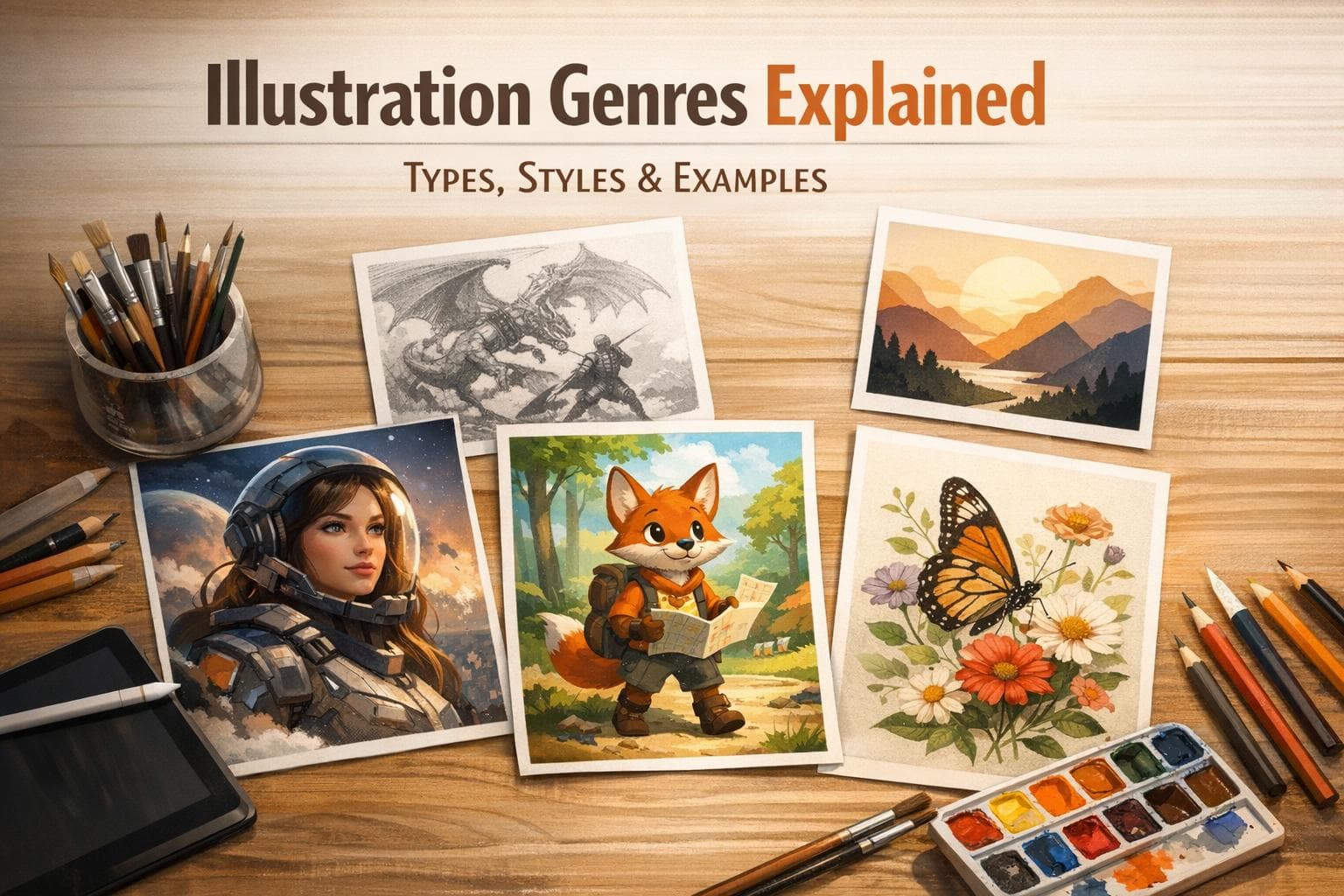
Illustration Genres Explained: Types, Styles & Examples
Illustrations are more than just visuals - they’re tools for storytelling, branding, and communication. Choosing the right genre means balancing purpose, technique, and style to create visuals that resonate with your audience. Here’s a quick summary of what you need to know:
- Purpose: Defines the use - like editorial, advertising, or product visuals.
- Technique: Includes physical mediums (like watercolor) or digital tools (like vector art).
- Style: Shapes the aesthetic, from flat design to surreal imagery.
Why does this matter? Custom illustrations can boost engagement by up to 94%, helping brands stand out with visuals that express their identity. Whether you’re aiming for simplicity, sophistication, or boldness, there’s a genre to match your goals.
Popular Techniques:
- Physical: Watercolor, pencil, ink - adds texture and a personal touch.
- Digital: Vector graphics, AI tools - flexible, scalable, and efficient.
Common Styles:
- Flat: Simple, bold, and clean - ideal for apps and websites.
- Line Art: Minimal and friendly - great for logos and social media.
- 3D/Isometric: Adds depth - perfect for tech or product visuals.
- Vintage/Retro: Evokes nostalgia - works well for packaging and branding.
- Surreal/Psychedelic: Attention-grabbing - used in events and campaigns.
AI Tools: Platforms like IllustrationsAI simplify the process, offering style filters, brand reference uploads, and scalable file formats (e.g., SVG, PNG). This ensures your visuals align with your brand while saving time.
Key Takeaway:
Select an illustration genre that reflects your brand’s personality and purpose. Use scalable formats and efficient tools to maintain quality across platforms. Whether you’re a playful startup or an elegant luxury brand, the right visuals can leave a lasting impression.
5 Digital Illustration Styles Every Artist Should Try
Core Illustration Techniques
Every illustration begins with a technique - the tools and methods that bring creative ideas to life. These approaches generally fall into two main categories: traditional techniques, which rely on physical materials, and digital techniques, which use software and AI-powered tools. Understanding both can help you choose the best visual approach for your brand.
Traditional Techniques
Traditional illustration uses physical materials like graphite, charcoal, ink, and paint on surfaces such as paper or canvas. Each medium offers distinct textures and reflects the artist's hand movements through brushstrokes, pressure, and shading.
Take pencil and charcoal, for example. A pencil provides precision for intricate sketches, while charcoal offers bold contrast and smooth blending, though it's less forgiving when it comes to mistakes. Watercolor is another favorite, known for its translucent washes and organic blending, creating an airy, fluid aesthetic. Meanwhile, pen and ink deliver sharp, clean lines and often use crosshatching to add depth and shading.
These methods produce one-of-a-kind works that are hard to replicate exactly, making them highly distinctive. When used in branding, traditional illustrations are often scanned to capture their textures in high resolution, then refined digitally to create flexible, scalable assets.
Digital Techniques
Digital illustration relies on tools like tablets, styluses, and specialized software. Unlike traditional methods, digital work offers unmatched flexibility. Mistakes can be undone instantly, layers allow for easy separation of elements like linework and shading, and resizing doesn’t compromise image quality.
Vector graphics, for instance, are perfect for logos since they can be scaled infinitely without losing clarity. AI-powered features like Auto-trace and LiveSketch can even convert hand-drawn sketches into polished, scalable vector designs.
Digital painting takes things further by simulating traditional media with brush presets and texture plugins. Touch-sensitive styluses mimic the feel of traditional tools while offering precise control and easy editing. While the initial investment in digital equipment and software can be high, it eliminates the recurring costs of physical materials and ensures consistent, scalable results.
Both traditional and digital techniques have their strengths, and combining them often leads to the most dynamic and effective illustrations.
Common Illustration Styles and Their Uses
Once you’ve grasped the core techniques, the next step is finding a style that aligns with your brand’s goals. Different illustration styles bring unique visual qualities, making them better suited for specific applications. Below, we’ll explore some popular styles with real-world examples to help guide your decision.
Flat Illustration
Flat illustration relies on 2D shapes, bold colors, and avoids gradients, offering a clean and straightforward look. This style became a major trend in 2020 and continues to dominate apps and websites.
The appeal isn’t just visual - it’s practical. Flat illustrations are lightweight and scalable because they’re vector-based. Companies like Airbnb and Shopify use flat design for user interfaces, onboarding experiences, and infographics. When clarity and simplicity are key, flat illustration ensures users can absorb information quickly without distractions.
Line Art and Doodle
Line art emphasizes form using simple strokes, often in monochrome, making it a go-to for logos, icons, and social media visuals.
Doodle illustrations, by contrast, add a playful, human element to digital platforms. Dropbox, for instance, uses doodles to soften its tech-heavy interface, while GoHenry employs whimsical line art to make financial topics feel approachable. If your brand aims to convey warmth and friendliness, line art creates a relaxed and inviting vibe.
3D and Isometric Illustration
3D and isometric styles introduce depth, volume, and perspective through shading, textures, and lighting. Unlike flat designs, these styles simulate physical space, making them ideal for illustrating complex systems or products.
Isometric illustrations work particularly well for cloud infrastructure diagrams, product mockups, and explainer videos. Digital Ocean uses isometric visuals to simplify abstract server architecture, while Density relies on spatial illustrations for explaining occupancy data. Brands like Robinhood use 3D visuals to make intricate financial data easier to understand. These styles are especially effective for tech, gaming, and product-focused brands seeking to add realism and depth.
Vintage and Retro Illustration
Vintage and retro styles draw inspiration from specific eras, such as the grainy textures and muted tones of the 1970s or the bold geometric patterns of the 1980s. These designs often incorporate textures and classic fonts to evoke nostalgia and heritage.
Burger King has tapped into 1970s-inspired assets to reconnect with its roots, while Endor Labs uses retro-futurism to stand out in a crowded market. This approach is particularly impactful for packaging, book covers, and editorial content where tradition and craftsmanship are central themes. If your brand’s story emphasizes legacy or authenticity, vintage illustration delivers that message instantly.
Surreal and Psychedelic Illustration
Surreal and psychedelic designs feature dreamlike imagery, vibrant colors, and intricate details that demand attention. These bold, maximalist visuals are perfect for event posters, album covers, and creative campaigns.
Gucci uses surreal illustrations to elevate its fashion into the realm of fine art, while Nissan employed cyberpunk-inspired animations at Piccadilly Circus to create a striking visual spectacle. In environments where standing out is essential, this style communicates boldness, creativity, and luxury, ensuring your brand leaves a lasting impression.
Using AI for Brand-Aligned Illustrations
AI tools have made it possible to create brand-aligned visuals in just minutes. This not only speeds up the creative process but also ensures your brand’s visual identity stays consistent across all platforms.
AI-Powered Customization
One of the biggest strengths of AI tools lies in their ability to work with predefined styles. By selecting a specific style filter - like "Flat", "Anime", "Sci-fi", or "Retro" - you guide the AI to produce visuals that match your brand’s aesthetic. Without this direction, AI often defaults to photorealistic results, which might not fit your brand’s needs.
"Style helps the model narrow its response and brings the output closer to what you actually had in mind when you wrote the prompt." - Leonardo.Ai
IllustrationsAI makes this process even easier by letting you upload brand reference images and choose from predefined styles to ensure all your visuals stay on-brand. Whether you’re creating social media posts, website graphics, or marketing materials, this platform helps maintain a consistent look. Its custom illustration packs allow you to produce themed sets that share the same visual language, giving your brand a cohesive presence.
To get the best results, use precise prompts. For example, terms like "rim-lit" or "shallow depth of field" can help create a cinematic effect. The more specific you are, the more closely the output will align with your vision.
Exporting and Scalability
Having flexible file formats is crucial. Vector-based exports - such as SVG, AI, and EPS - are particularly useful because they allow you to resize graphics for everything from mobile screens to billboards without losing quality. IllustrationsAI supports a wide range of export formats, including PNG, JPG, and WebP for raster images, as well as SVG, AI, and EPS for vector files, so you’ll always have the right format for any application.
This scalability is key for brands. Original artwork can lead to a 94% increase in engagement compared to using generic stock images. With scalable, high-quality illustrations, you can easily adapt your visuals for any platform - whether it’s an Instagram post or a trade show banner - without sacrificing clarity or impact.
How to Choose the Right Illustration Genre for Your Brand
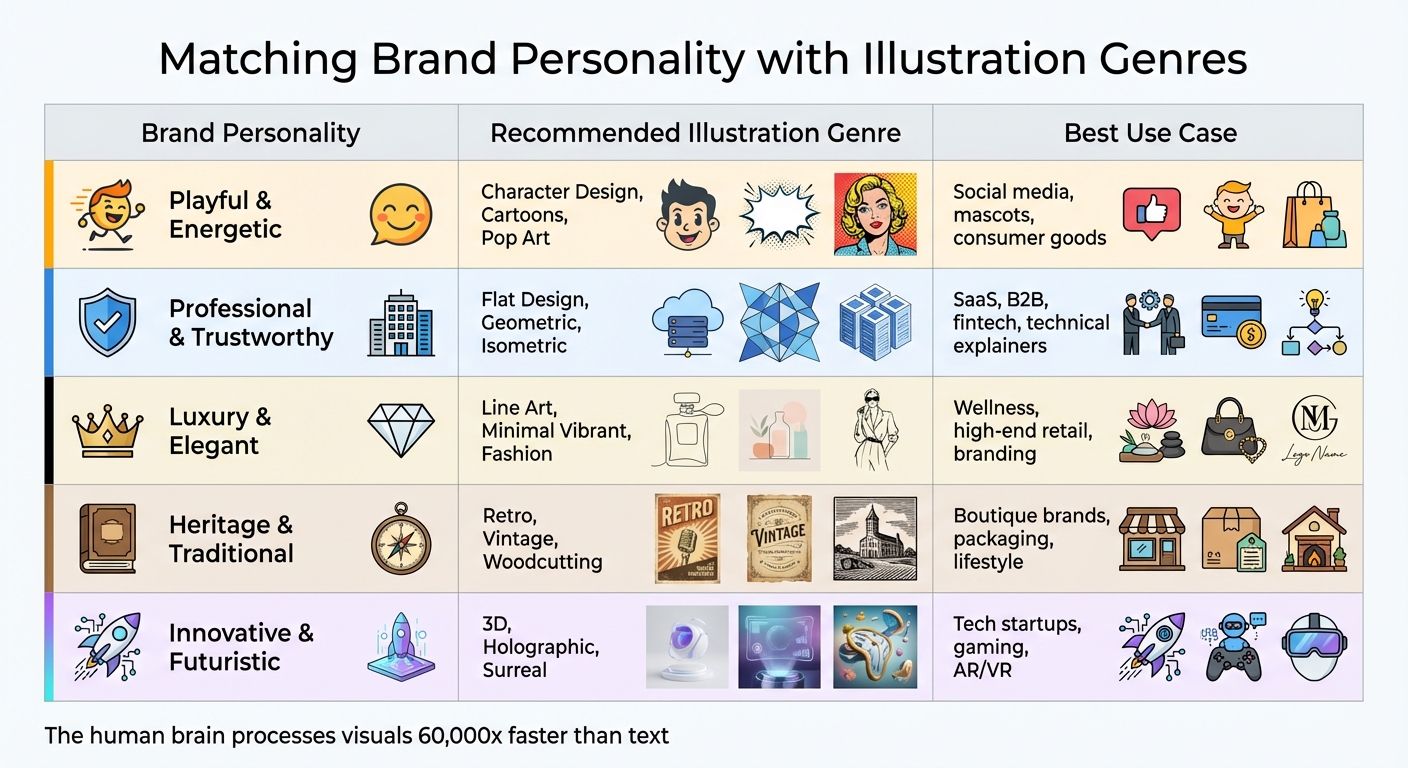
Illustration Styles Guide: Matching Brand Personality with Visual Genres
Matching Genres with Brand Goals
The illustration style you choose should reflect your brand's personality and connect with your audience. For example, playful brands often shine with bold character designs or pop art, while more professional brands - like those in SaaS, B2B, or fintech - tend to work well with clean, structured styles such as flat design or isometric illustrations.
Here’s why this matters: the human brain processes visuals 60,000 times faster than text. That means the right illustration can make your message stick almost instantly. Tech startups might lean into 3D or holographic designs to project a cutting-edge vibe, while heritage brands can tap into retro or vintage styles to evoke nostalgia. Similarly, luxury or wellness brands often favor refined line art or minimal vibrant designs to convey sophistication without overwhelming the viewer.
| Brand Personality | Recommended Illustration Genre | Best Use Case |
|---|---|---|
| Playful & Energetic | Character Design, Cartoons, Pop Art | Social media, mascots, consumer goods |
| Professional & Trustworthy | Flat Design, Geometric, Isometric | SaaS, B2B, fintech, technical explainers |
| Luxury & Elegant | Line Art, Minimal Vibrant, Fashion | Wellness, high-end retail, branding |
| Heritage & Traditional | Retro, Vintage, Woodcutting | Boutique brands, packaging, lifestyle |
| Innovative & Futuristic | 3D, Holographic, Surreal | Tech startups, gaming, AR/VR |
The table above offers a quick guide for matching your brand's personality with an illustration style. Once you’ve identified the right genre, make sure it’s practical and scalable for all your brand’s needs.
Evaluating Practicality and Scalability
Scalability is key when choosing illustrations. Vector-based designs are a must for assets that need to look sharp at any size, whether it’s a small mobile screen or a massive billboard. Flat illustrations, in particular, are ideal for digital platforms because they reduce load times and improve readability.
Think about production time as well. Minimalist or line art styles are quicker to create compared to highly detailed artwork, which can save time without compromising impact. If your brand is venturing into emerging technologies like AR or VR, 3D illustrations can deliver a more immersive experience, while isometric styles are perfect for breaking down complex systems or processes.
With tools like IllustrationsAI, you can export your designs in multiple formats - SVG, AI, and EPS for vectors, or PNG, JPG, and WebP for raster images - ensuring your visuals maintain their quality across different platforms. This flexibility allows you to stay consistent without having to start from scratch.
Conclusion
Grasping the nuances of illustration genres is essential for effectively conveying your brand's message. Whether it’s the sleek simplicity of flat design for a SaaS interface, the immersive appeal of 3D visuals for a product launch, or the nostalgic charm of vintage styles, each genre plays a strategic role in connecting with your audience on a deeper level.
Striking the right balance between creativity and practicality is equally important. While traditional illustration methods can be time-intensive and resource-heavy, modern AI tools simplify the process. These tools allow you to create custom, high-quality visuals that align with your brand identity and adapt to various formats. This means you can explore a range of styles - from detailed line art to dynamic isometric designs - without the usual hurdles, giving you the freedom to discover what truly resonates with your audience.
Custom illustrations also play a pivotal role in building brand recognition. Consistency across all platforms and touchpoints strengthens your brand’s identity and credibility, ensuring a unified visual presence that ties creative expression to functional design.
To make the most of your visuals, start by defining your brand’s personality and goals. Choose a genre that complements these elements, and focus on scalability and flexibility to ensure your illustrations perform well across platforms and campaigns. With the right strategy and tools, you can craft visuals that not only look great but also deliver measurable business results.
FAQs
Choosing the right illustration style for your brand starts with understanding three key elements: your brand personality, target audience, and the message you want to convey. Each style sets a distinct tone - flat illustrations or cartoons, for instance, bring a playful and approachable vibe, making them a great fit for brands geared toward younger audiences or those aiming for a lighthearted, casual feel. Meanwhile, more detailed or realistic styles exude elegance and professionalism, which is perfect for luxury or corporate brands looking to project sophistication.
It's also important to think about where these illustrations will appear. Editorial illustrations work wonderfully in magazines or thought leadership pieces, adding depth and context to written content. On the flip side, bold and stylized designs are excellent for grabbing attention on social media or in advertising campaigns. The trick is choosing a style that not only reflects your brand's identity but also connects with your audience, creating a consistent and unforgettable visual impact.
Digital illustration techniques provide a level of ease and efficiency that traditional methods simply can't match. Artists can try out different styles, play with colors, and tweak layouts without the hassle of physical supplies. This not only cuts down on costs but also saves a ton of time. Plus, any mistakes? They’re no big deal - just a quick undo, and you’re back on track. The editing process is streamlined, making creativity flow much more smoothly.
Another big win for digital illustrations is how perfectly they fit into today’s tech-driven world. They can be resized, adjusted, and effortlessly integrated into platforms like websites, social media, or apps. Whether you’re going for a sleek, minimal look or something more intricate and textured, digital tools make it easy to adapt to any project’s needs. These benefits make digital illustration a go-to option for both artistic expression and professional work.
AI tools are a game-changer for keeping branding consistent. They provide standardized templates, style guides, and automated tweaks that align perfectly with a brand's visual identity. This means key elements like color schemes, line thickness, and overall design stay uniform, cutting down on inconsistencies that can arise from personal interpretation.
On top of that, AI can examine existing brand assets and create new illustrations that seamlessly match the established look and feel. It also simplifies version control and flags anything that strays from the brand guidelines. This makes it much easier to maintain a unified, recognizable style across everything from marketing materials to digital media.

Meet the Author
Vignesh Rao Y
Vignesh is driven by ideas that create a tangible impact. At Illustrations AI, he specializes in content that helps designers and marketers speed up their creative workflows. When he's not turning complex ideas into simple visuals, you might find him lost in a book, jotting down ideas in his notebook, or connecting the dots others overlook.