How Whimsical Illustrations Tell Better Brand Stories
Whimsical illustrations are transforming branding by making visuals relatable, memorable, and emotionally engaging. Unlike stock photos or overly polished designs, these playful, hand-drawn visuals help brands stand out, build trust, and connect with audiences on a deeper level. Why does it work?
- Faster Processing: Visuals are processed 60,000x faster than text, and emotional visuals stick longer.
- Higher Engagement: Examples like Mailchimp show whimsical designs can boost user engagement by 42%.
- Better Recall: Illustrations have a 39% recall rate versus 22% for photos.
Brands like Ben & Jerry’s and Method use whimsical designs to create approachable, standout identities, driving customer loyalty and sales. Tools like IllustrationsAI make it easy to create custom designs, ensuring consistency and boosting recognition by up to 80%. Start by defining your brand’s visual style and replacing generic images with tailored illustrations that reflect your personality.
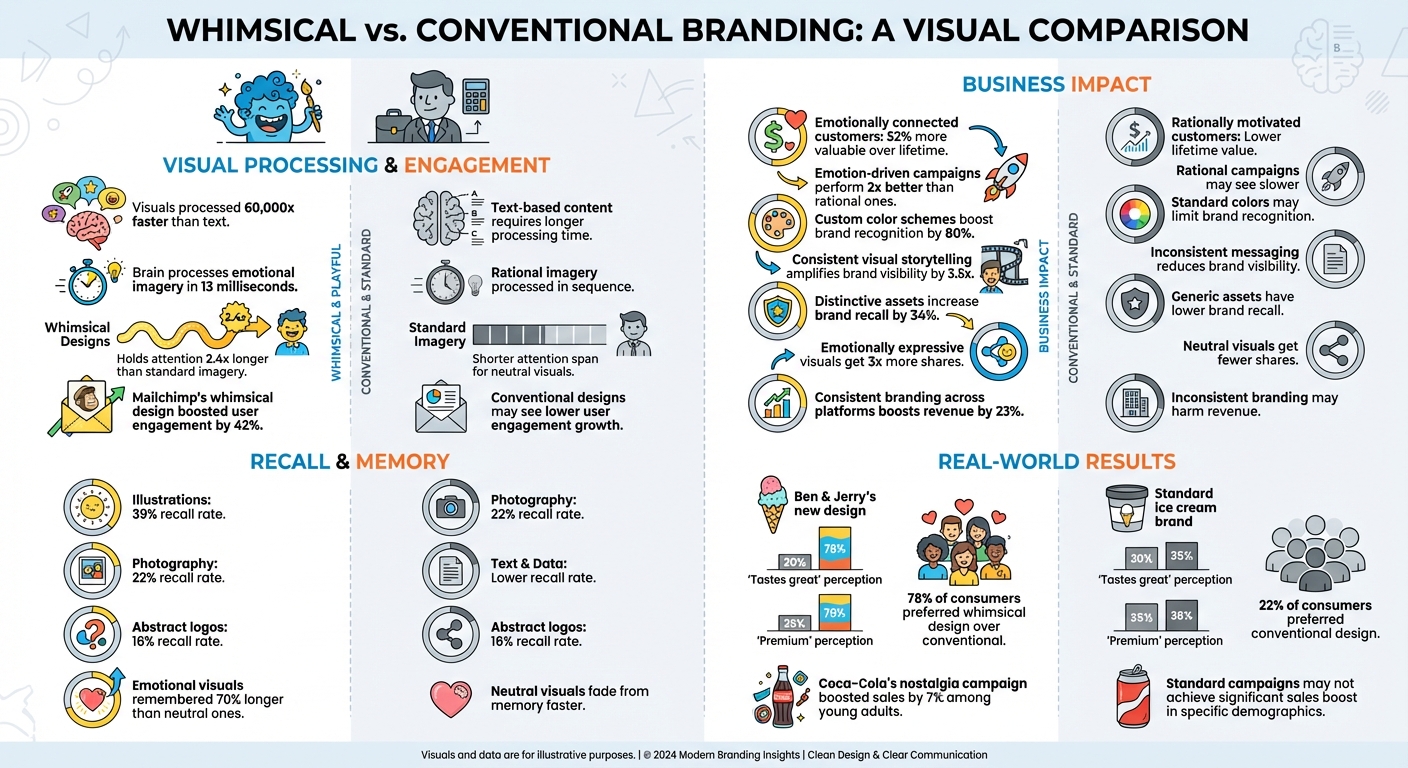
Whimsical Illustrations vs Conventional Branding: Key Performance Metrics
The Science Behind Emotional Connection and Storytelling
The Psychology of Whimsy in Branding
Whimsical illustrations have a unique way of sticking in our minds, and the science behind it is fascinating. When you look at a playful character or a hand-drawn design, your brain processes that emotional imagery in just 13 milliseconds. This lightning-fast reaction engages the amygdala, the part of the brain that flags experiences as important and worth remembering.
But it’s not just about looking cute. Researchers have identified two types of "cute" that impact us differently. One is the baby schema - think big eyes and rounded shapes - that triggers nurturing instincts. The other is "whimsical cute", which sparks feelings of playfulness, joy, and a craving for rewards. As behavioral scientist Sophie Attwood Ph.D. explains:
"Whimsical cute... activates playfulness, joy and reward-seeking. They make us feel good."
These feelings aren’t just fleeting. They release feel-good chemicals like dopamine, serotonin, and endorphins, which create a sense of comfort and shared identity. Nostalgia also plays a big role here. Coca-Cola’s "Share a Coke" campaign, which tapped into 1990s nostalgia, boosted sales by 7% among young adults. That emotional connection wasn’t just a feel-good moment; it delivered real, measurable results.
The way whimsical visuals engage our brains so quickly is also why they’re so memorable, as the next section explains.
Visual Storytelling and Consumer Recall
Whimsical illustrations don’t just grab attention - they make it stick. Studies show that illustrations have a 39% recall rate, compared to 22% for photography and 16% for abstract logos. This difference lies in how our brains process visual stories. When you see a whimsical illustration that tells a story, it activates the limbic system, which governs emotions and long-term memory. Even more fascinating, mirror neurons in our brains mimic the emotions we observe, creating a deeper connection.
The business impact of these emotional visuals is undeniable. Emotionally charged visuals are remembered 70% longer than neutral ones, and ad campaigns that focus on emotions perform twice as well as those based on logic. Whimsical illustrations, with their warmth and human touch, hold attention 2.4 times longer than standard imagery. On social media, emotionally expressive visuals get 3 times more shares than neutral ones.
Jennifer Ward, a brand strategist, sums it up perfectly:
"Custom illustration brings humanity into branding in a way that evokes nostalgia, wonder, and intimacy. It softens the digital edge and offers what every luxury client craves: meaning."
The takeaway? When you create custom illustrations for your brand, they don’t just make it look good - they transform how people feel about and remember it. The emotional connection they create is a game-changer.
Case Studies: Whimsical Branding Success Stories
Ben & Jerry's: Playful Packaging with Personality
Ben & Jerry's isn't just about ice cream - it’s about breaking the mold. Back in the 1980s, while big names like McDonald's and Coca-Cola leaned on sleek, geometric fonts, Ben & Jerry's went bold with chunky, hand-drawn lettering. This quirky, hand-crafted style gave the brand a fresh, down-to-earth vibe, setting it apart from the corporate crowd. Fast forward to 2015, their packaging evolved into a playful Vermont-inspired scene featuring a friendly cow and fluffy clouds, emphasizing their "folksy" charm.
In August 2023, they took it a step further by moving large, textured illustrations of ice cream scoops to the center of their pints. According to Designalytics, this tweak worked wonders. The perception of "tastes great" shot up from 20% to 78%, while "premium" jumped from 26% to 70%. When asked to choose between the old and new designs, 78% of consumers favored the updated, whimsical look.
This focus on texture isn’t accidental. Co-founder Ben Cohen, who has anosmia (a lack of smell), pushed the brand to emphasize "mouthfeel." This led to packaging that visually highlights the chunky ingredients inside. Each flavor also tells its own story with cheeky names like "Cherry Garcia" and "Chunky Monkey", creating emotional connections through humor and pop culture references. On Instagram, their colorful designs consistently see engagement rates over 8%. And in late 2024, their use of AI-generated ad backgrounds resulted in a 7% boost in link clicks and a 6.5% drop in cost per click.
Ben & Jerry's proves that whimsy isn’t just fun - it’s a powerful way to build a brand that feels personal and memorable.
Method: Eco-Friendly Storytelling with Whimsical Designs
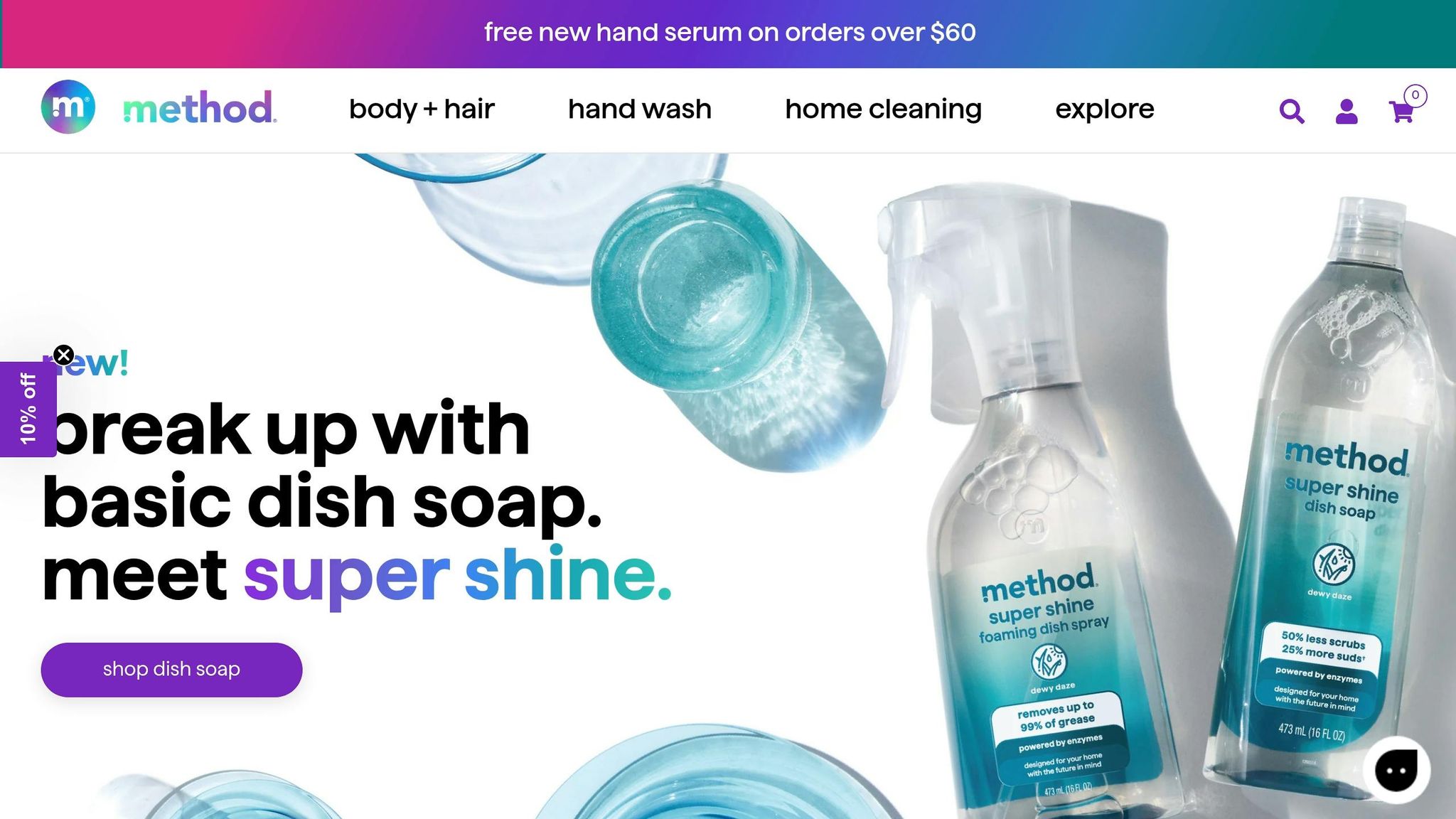
Method takes a different spin on whimsy, using it to make sustainability feel approachable and exciting. By blending playful design with eco-conscious values, they’ve turned cleaning products into something more than just functional - they’ve made them fun. The brand’s quirky, "wonderfully weird" personality stands out in a category often dominated by sterile, corporate aesthetics. Their use of all-lowercase typography gives off a casual, friendly vibe, making eco-friendly choices feel less like a chore and more like a movement.
This design approach humanizes a product category that’s typically seen as boring or utilitarian. Method’s playful visuals not only grab attention but also send a message: caring for the planet doesn’t have to be serious or dull. Their products become conversation starters and symbols of shared values, proving that even everyday items can spark joy and connection.
Whimsical vs. Conventional Branding: A Comparative Analysis
Engagement and Emotional Impact
Whimsical branding doesn’t just stand out - it performs. Take Mailchimp, for example. When the company introduced its playful monkey mascot and quirky illustrations, user engagement soared by 42%. Why? Because emotional visuals spark an instant, positive reaction in ways that conventional imagery rarely can.
This emotional connection isn’t just feel-good fluff - it’s measurable. Research from Harvard Business Review reveals that emotionally connected customers are 52% more valuable over their lifetime compared to those who are merely satisfied. Similarly, the Institute of Practitioners in Advertising found that emotion-driven campaigns outperform rational ones by double and yield far better long-term results.
"Features get you in the door. Personality gets you remembered." – Allison Kuehn, Brand Designer
Conventional branding, in contrast, often falls flat. Stock images and corporate photography may look polished, but they tend to lack personality. One designer bluntly described them as having "the personality of a tax form". With 78% of SaaS websites relying on generic stock visuals, many brands end up blending into what experts call "digital wallpaper". Whimsical, custom designs, however, become proprietary assets that competitors can’t easily copy. These unique visuals create "memory structures" tied to emotion, giving brands a distinct edge in recall and connection.
Brand Recall and Loyalty Metrics
Whimsical design doesn’t just engage - it sticks. Research shows that illustrations achieve a 39% recall rate, compared to 22% for photography and a mere 16% for abstract logos. This phenomenon, known as the "pictorial superiority effect", means that people are far more likely to remember and understand information when it’s presented visually rather than as plain text.
The benefits extend to brand recognition, too. Custom color schemes can boost brand recognition by up to 80%, while consistent visual storytelling can amplify brand visibility by 3.5 times. Distinctive assets like custom illustrations increase overall brand recall by 34%. As the Ehrenberg-Bass Institute for Marketing Science puts it:
"Distinctiveness - not awareness - drives brand growth."
Slack is a great example of this in action. Its playful design, featuring custom emojis and quirky illustrations, didn’t just enhance its personality - it helped fuel the company’s valuation and customer loyalty.
"Your brand's visual voice isn't just 'nice to have' anymore. It's the difference between customers who tolerate you and customers who evangelize you."
How to Incorporate Whimsical Illustrations into Your Brand
Defining Your Brand's Visual Style
Before diving into illustration creation, it’s crucial to establish clear visual guidelines. Successful brands typically stick to one primary illustration style that aligns with their identity. Whether it’s Minimalist Line Art for a sleek, professional vibe, Flat Design for a bold and fun approach, Isometric 3D for a technical edge, or Organic Hand-Drawn styles for a more approachable feel, consistency is key.
To maintain this consistency, document your style choices meticulously. Define details like line weights (e.g., 1–2px for delicate designs or 5–6px for bolder ones), corner shapes (sharp or rounded), and the overall complexity of the illustrations. Keep your color palette limited to 3–5 shades, combining primary brand colors with a few complementary tones and accent highlights. This disciplined approach ensures your visuals stay cohesive, which can have a measurable impact - research shows that consistent branding across platforms can boost revenue by up to 23%.
Each type of illustration should have a specific purpose. Hero illustrations, for example, should highlight your core value proposition on landing pages. Spot illustrations make feature lists easier to scan, while empty state illustrations (like those on 404 pages) can turn frustrating moments into delightful, memorable interactions. By assigning clear roles to each visual, you avoid creating illustrations that look nice but lack strategic value.
Using IllustrationsAI for Custom Whimsical Designs
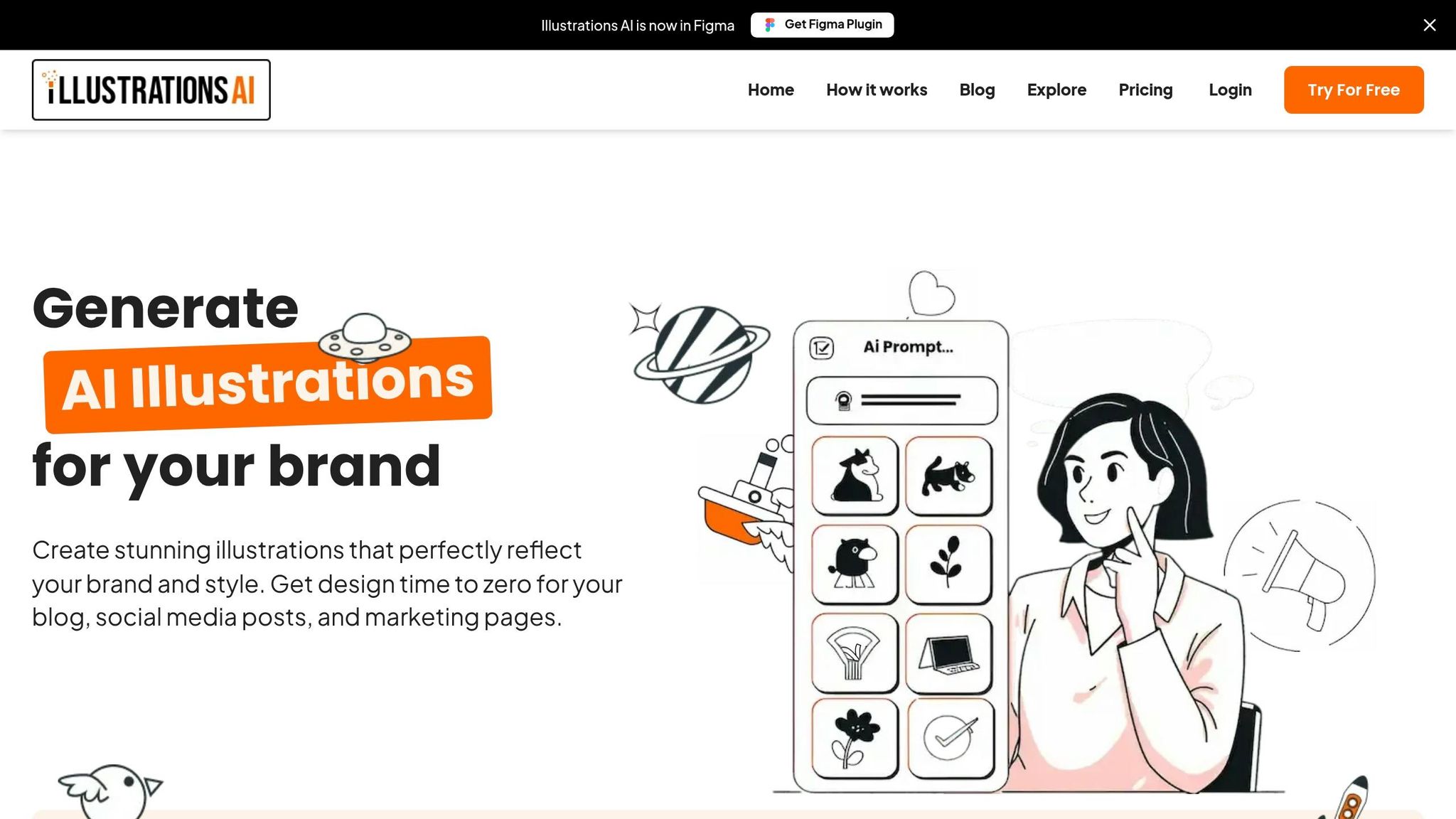
Once your brand’s visual style is clearly defined, the next step is creating cohesive illustrations that reflect your brand’s personality. Tools like IllustrationsAI make this process efficient, even for teams without design expertise. The platform allows you to upload reference images that match your aesthetic, then generates royalty-free illustrations in various formats (SVG, PNG, AI, EPS, JPG) ready for immediate use.
To ensure consistency, focus on pack-based generation rather than creating individual assets one by one. Generate 10–15 illustrations in a single session to maintain a unified style across all visuals. This approach prevents the style drift that can occur when assets are designed sporadically. For best results, use a master prompt template that includes your base style description, specific content requirements, and style modifiers. Advanced teams can take this further by using a structured JSON format to lock in consistent artistic parameters for every design.
Organize your illustrations systematically from the start. Create folders based on their purpose (e.g., /heroes, /spots, /icons) and adopt clear naming conventions like illustration-[category]-[description]-[date].svg. This level of organization not only streamlines your workflow but also reinforces brand recognition. Studies show that visuals are processed three times faster than text, and it typically takes 5–7 impressions for a brand to stick in someone’s mind. Consistency in your visual assets isn’t just helpful - it’s essential for building recognition and fostering the emotional connections that make whimsical branding so effective.
3 ways to use illustration for branding
Conclusion
Whimsical illustrations do much more than decorate - they tell stories that shape how customers perceive and connect with brands. Studies reveal that our brains process visuals much faster than text, making playful imagery a highly effective way to grab attention. Take Mailchimp, for example - their quirky mascot increased user engagement by 42%.
But it doesn’t stop at engagement. Custom whimsical illustrations add warmth and personality to a brand, making it feel more approachable. They also simplify complex ideas through visual metaphors, helping customers understand your message almost instantly. Plus, in a world where 78% of SaaS websites rely on overused stock photos, these illustrations can set your brand apart. As brand designer Allison Kuehn wisely said:
"Features get you in the door. Personality gets you remembered."
So, how can brands bring this approach to life? Start by rethinking your visuals. Tools like IllustrationsAI make it simple to create custom, royalty-free illustrations (in formats like SVG, PNG, and JPG) without needing design skills. By uploading reference images, you can generate 10–15 cohesive illustrations in one session, ensuring a consistent visual identity. This can boost brand recognition by up to 80%. With plans starting at $28 per illustration (billed annually), high-quality whimsical design is now within reach for businesses of all sizes.
To get started, audit your current visuals and replace generic images with custom illustrations that reflect your brand’s unique personality. Develop a clear visual style guide and incorporate whimsical elements into key touchpoints - like landing pages, onboarding flows, and error messages - to create authentic connections through your storytelling.
FAQs
Whimsical illustrations play a key role in building brand trust by creating emotional connections, adding personality, and making a brand feel more relatable and memorable. They provide a visual way to express the brand's character, helping it stand out while connecting with customers on a personal level. This approach not only boosts recognition but also strengthens loyalty by offering an authentic and engaging experience.
When showcasing real, tangible elements like faces, locations, or products, brands should rely on photos. Photos excel at conveying authenticity and visual realism, which helps build trust. They create an immediate sense of connection, making them perfect for highlighting the genuine aspects of a brand or its offerings.
To keep your illustration style consistent across all channels, start by building a unified visual system. This includes defining specific lines, color palettes, and design elements that reflect your brand. As your content expands, AI-powered tools can help you maintain this consistency at scale.
It’s also essential to develop detailed brand guidelines. These should outline how your visuals should appear and be applied across different platforms. By sticking to these guidelines, you can ensure your visuals stay cohesive and reinforce your brand identity effectively.

Meet the Author
Vignesh Rao Y
Vignesh is driven by ideas that create a tangible impact. At Illustrations AI, he specializes in content that helps designers and marketers speed up their creative workflows. When he's not turning complex ideas into simple visuals, you might find him lost in a book, jotting down ideas in his notebook, or connecting the dots others overlook.